

Water activation through EM-Ceramics
Hardly any other topic is as spiritualized as EM ceramics. This refers to ceramics that have been inoculated with effective microorganisms (EM) during production. EM consist of lactic acid bacteria, yeast fungi, and other putrefactive microorganisms, among other things. The easiest way to visualize this is as the liquid fermentation result of a compost heap. This liquid is mixed with a ceramic mass. After firing, the EM are supposed to work all kinds of miracles. At least, that is what some esotericists believe and what clever businesspeople promise.
It is time to shed some light on the wonder nebula with factual information.
All ceramic raw materials consist of more or less fine mineral base substances. After production, these are then sintered and hardened in a thermal process (firing). The result is plates, cups, etc.
However, in order to make ceramic clay malleable and to hold the components together, “plastic,” i.e., malleable components are required. Please compare this to baking a cake. Yeast is needed here as an “adhesive” that holds all the other ingredients, such as flour, etc., together. Furthermore, during fermentation, the yeast produces CO2, which causes the dough to rise and become airy.
Nothing else happens when the ceramic clay has to ferment after mixing. This technical term describes the fermentation of biomaterials contained in natural clay. This makes the clay slippery, the clay minerals arrange themselves regularly, and it becomes malleable. This process can take weeks, days, or years. 3,000 years ago, Chinese ceramic masters bequeathed their clay supplies to their sons. It took decades before they could use it to create works of art. During this maturing period, the clay was repeatedly soaked in urine and mixed.

Maturation process of ceramics
Today, mechanical aids are used for mixing, and vacuum units are used to extract the air from the clay and make it homogeneous and thus plastic. Nevertheless, we still need a settling time, which can range from one week to eight weeks, depending on how many coarse, non-clay components are in the ceramic mass.
For our special compounds, which are composed almost exclusively of mineral components (CeraActiv and Granicium), machine production is not sufficient. Here, we must also add EM as an aid to mixing. Otherwise, none of these ceramic compounds would be moldable.
We use the product EM1 from the manufacturer Emiko for this purpose. Each mixture is enriched with it. You can smell it too. The ceramic mass “smells” like compost, but after two weeks it becomes wonderfully malleable. Only then can we process it.
The effective microorganisms also have an influence on the surface properties of the ceramic. Similar to a yeast cake that rises during fermentation, the fermentation of EM creates a very large micro-surface on the ceramic surface. The ceramic becomes micro-rough. This multiplies the effective surface area because water can now interact with a much larger number of silicate quartz grains. These surface structures are then permanently fixed by firing and sintering the ceramic.

Firing EM-Ceramics
But what happened to the EM? Some EM ceramists tell the most amazing stories, which are probably just marketing hype. The fact is that not a single microorganism survives the firing process. After a firing temperature of over 1,200°C, there is nothing organic left. But the traces of the EM’s effect remain on the surface – at least on our ceramics.
We hope we have contributed to demystifying EM ceramics. As ceramists, we often find ourselves tearing our hair out when reading some product descriptions.

CeraAktiv Ceramic
We manufacture the activation cascades for our water devices from our specially developed CeraAktiv ceramic. To process this special ceramic made from silicate minerals, crystals, quartz, and feldspar rocks, we use effective microorganisms (EM) to achieve an enormously large effective surface area. This significantly increases the activation effect of the microcrystals on the water.
Modelle

Model S
Decentralised connection to the drinking water extraction point.
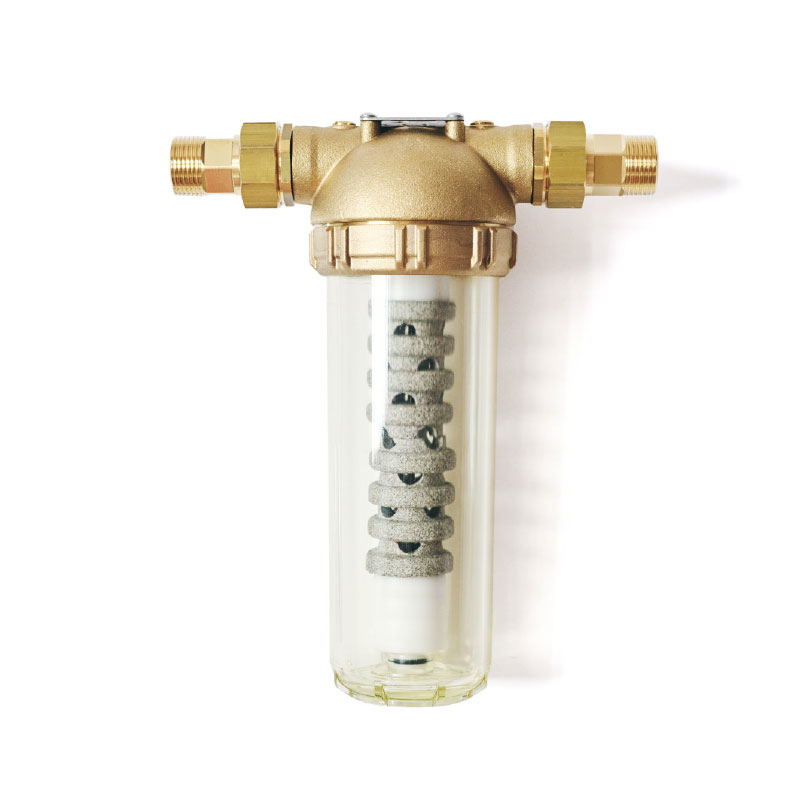
Model M
For supplying a house with up to 2 residential units.

Model L
Able to supply a house with up to 6 residential units or industrial use.
Discover all the products and possible combinations of the 3Quellen system from Denk.